How Local Area Marketing Differs from Traditional Organic SEO?
Traditional organic SEO aims to rank your website high in general search results through content creation, backlinks, and on-page SEO optimization. While effective for long-term traffic, it can take time and often overlooks the power of local intent. Local area marketing, on the other hand, prioritizes immediate, hyper-local visibility.
Below is how we can help your business dominate your local service area:
We Focus on Your Google Business Profile Over Your Website (60/40)
Local area marketing shifts the focus from your website to your Google Business Profile. Why? Because Google often displays GBP listings prominently in local searches, complete with maps, reviews, and contact info. We optimize your profile with accurate details, high-quality photos, regular posts, and service-specific keywords to make it the go-to entry point for customers—reducing reliance on website traffic alone.
We Help Build and Maintain Consistent Local Citations
List your business on directories like Yelp, Apple Maps, Bing Places, and niche sites (e.g., Angi for home services). Ensure the NAP is identical everywhere to avoid confusion for Google and AI crawlers. For a 30-mile area, prioritize hyperlocal directories and build 50+ citations to boost prominence. Inconsistent data can drop you from local results, while strong citations help AI engines verify your location and recommend you.
We Create Location-Specific Content Optimized for AI search results and Written by AI
We can develop dedicated pages or blog articles for services in key areas within 30 miles (e.g., “Plumbing Services in [Suburb 10 Miles Away]”). We help to structure content with Q&A formats which AI uses.
Implement Structured Data (aka Schema Markup)
We use schema.org markup on your site for local business details, reviews, FAQs, and services that your business offers. This helps Google and AI understand your content better, increasing your chances of appearing in AI-generated answers. For a 30-mile focus, include geo-coordinates and service area schema to signal coverage without spamming.
Understanding the Google Three-Pack in Local Search Results
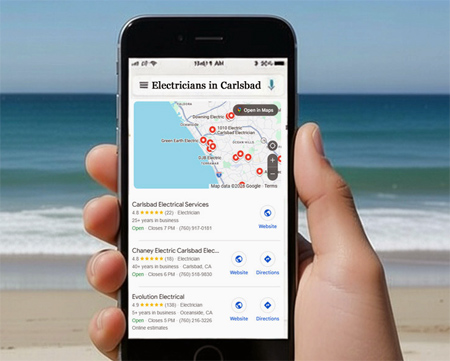
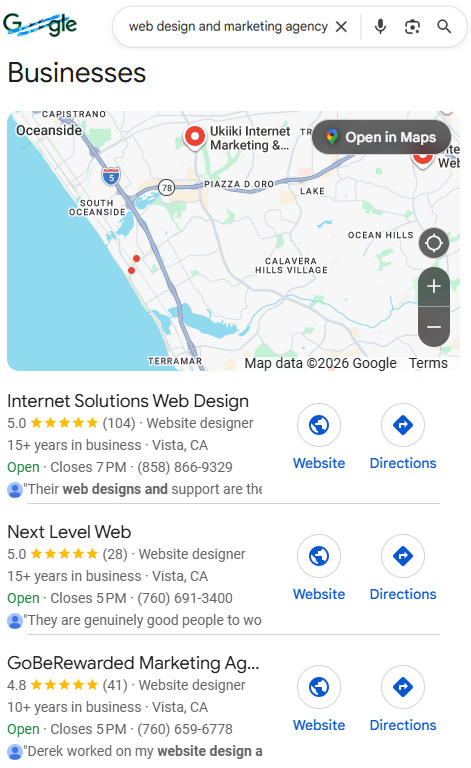
When someone searches for a local service, Google shows a “three-pack” which is the top three business listings with maps, ratings, and quick click links like “call” or “directions.” This is prime real estate at the very top. Statistics show that 44% of local searchers click on the Local 3-Pack results. Moreover, the #1 position in the pack captures about 17.6% of clicks, #2 gets 15.4%, and #3 receives 15.1%, meaning the vast majority of user attention goes to these top spots rather than scrolling further. Businesses in the three-pack also see 126% more traffic and 93% more user actions (like calls and website clicks) compared to those ranked lower.
We Optimize for Mobile and Voice Search
We ensure your website is mobile-friendly with fast load times, and easy navigation and perfect rendering on mobile devices which is the majority of visitors that come to your site. We tailor your site content for voice/AI searches by using natural language (e.g., full, grammatically correct sentences in FAQs). Since many local searches are mobile within a short radius, this directly impacts exposure in a 30-mile area.
(Optional but Valuable) Local Link Building and Authority
Yes, backlinks are still important. We help getting backlinks from local news sites, community blogs, or partnerships (e.g., sponsored events). This builds prominence, helping you outrank competitors in Google Maps and AI recommendations for nearby searches. The idea is to focus on quality over quantity. 10 relevant local backlinks links outperform 100 generic ones not tied to your area, so do not purchase random backlinks in bulk. Most of the backlinks will be from low-value sites that don’t last long on the Internet. Backlinks should be established slowly over time to prevent Google penalties.
We leverage AI Tools for Ongoing Optimization & Content Creation
We use AI-powered tools, we have been for at least the last couple of years. Our clients do so much better in Google search results with page content professionally written with tons of SEO keywords built in. This content far outweighs the content of the past in clients sites, which was primarily written by them. They know their business best, but we would take what they come up with and always integrate keywords and search terms in for them.
We use AI to analyze performance, discover untapped local keywords and predict trends within your 30-mile radius. You can track site progress with tools like Google Analytics or local rank trackers, with the goal of appearing in the top-3 positions in the local pack. If your clients are in competitive areas like San Diego, consistency over a few months typically yields measurable exposure gains.
How To Actively Manage Reviews and Reputation
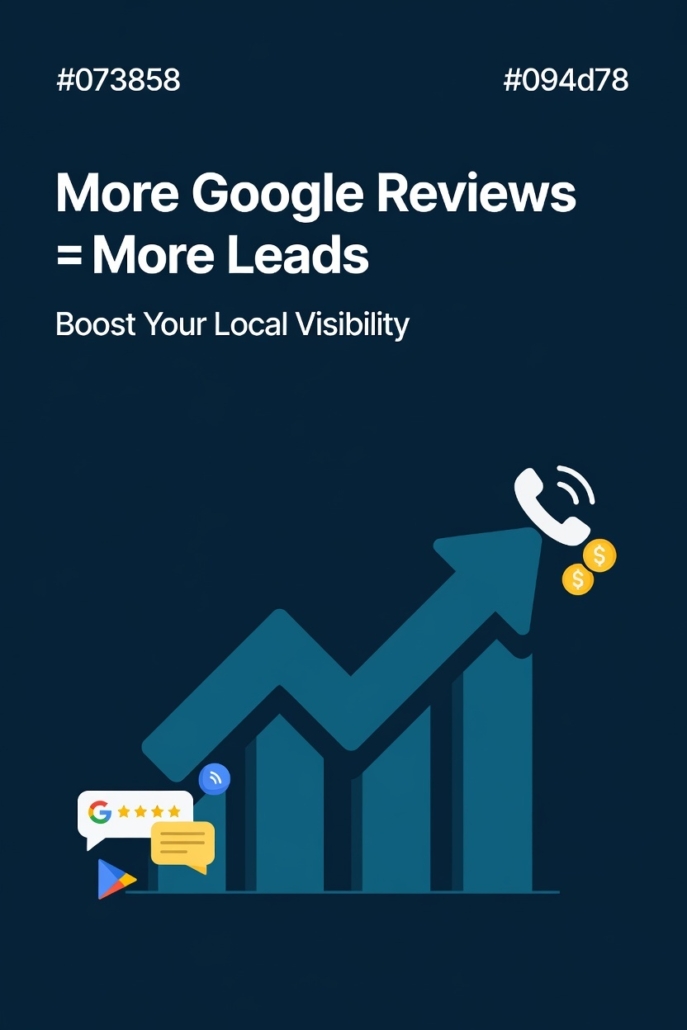
You must encourage detailed, positive (obviously) reviews on your GBP and other platforms, aim for at least 10 new reviews monthly. Respond to every review (positive or negative) professionally to show engagement and respond quick, like within 24 hours. The more active and responsive Google sees you on your profile, the more they trust you also called your “entity”. High ratings (4.5+ stars) and fresh reviews elevate prominence in Google’s local algorithm and AI Overviews, where sentiment analysis pulls trustworthy businesses. Tools like automated review requests can streamline this for clients.
If you though the above tips were good on local area marketing, we have a lot more that will leads to more traffic, leads and phone call with zero doubt. Grow your business today, give us a call.